It's easy to start your application.

It's easy to start your application.
The Preston M. Green Department of Electrical & Systems Engineering provides our students the opportunity to become directly involved in conducting research and finding new solutions to the world's greatest challenges.
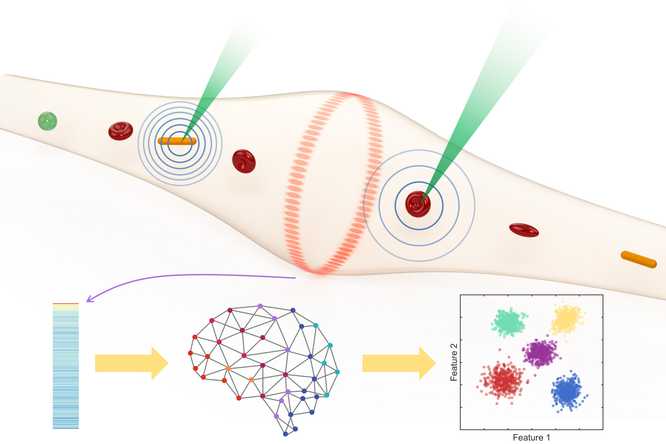
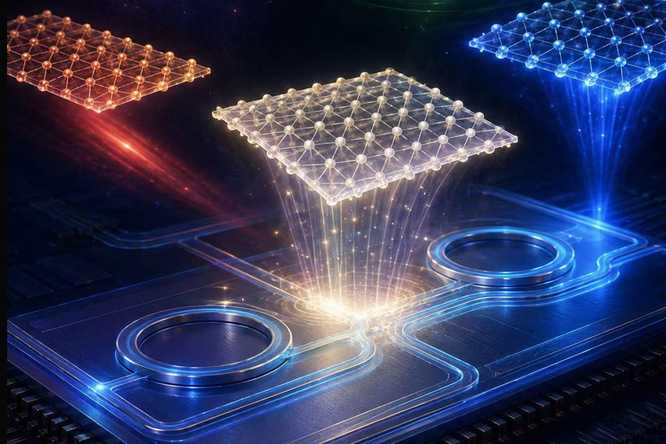
Research and university partnerships allow trainees the opportunity to work with renowned faculty and experts in the field as they explore and examine areas such as quantum optics, sensors, data sciences and systems optimization.
Our PhD students are fully funded, including full tuition support and health insurance. As a doctoral candidate, you will also receive a generous stipend to cover living expenses. This support is guaranteed as you continue to make satisfactory progress towards your degree.
Andrew Clark, an associate professor and director of PhD recruitment and admissions in the electrical and systems engineering department, discusses the unique aspects of ESE. He is joined by PhD candidates Maxwell Adolphson, BethAnna Jones, Addison Schwamb, and Hongchao Zhang, who emphasize the distinctive perspective on engineering challenges, the collegial environment, and numerous collaboration opportunities across departments and schools.
Our department offers a Doctor of Philosophy (PhD) in both electrical engineering and systems engineering.
The PhD program is designed for full-time students interested in pursuing a career in research or academics.
PhD information sessions
Student Profile

"I decided to pursue a graduate degree because it would allow me to take on challenging coursework, engage with like-minded people and take part in cutting-edge research initiatives."
Degree pursuing: PhD in electrical engineering
Students pursuing the Doctor of Philosophy (PhD) degree in Electrical Engineering or Systems Science & Mathematics must complete a minimum of 72 credit hours of post-baccalaureate study consistent with the residency and other applicable requirements of Washington University in St. Louis and the Graduate School. These 72 units must consist of at least 36 units of course work and at least 24 units of research, and may include work done to satisfy the requirements of a master's degree in a related discipline. Up to 24 units for the PhD may be transferred to Washington University in St. Louis from another institution.
Research Areas
Our faculty perform innovative research in four distinct areas: applied physics, devices and circuits, signals and imaging, and systems science.